Drowning
Feeling past the point of managing it — water with the volume turned up.
What dreaming about Drowning usually means
Drowning is water with the volume turned up, and reading it as a separate symbol rather than an intensity of the water entry is the right call for one reason: the water dreams attach to feeling and this one attaches to capacity. The accounts are consistent about it — reports cluster around situations that have passed the point of being managed, not situations that are merely difficult. The specific and recurring element is the breath. It is one of very few dreams with a physical component that people can identify precisely afterwards, and a meaningful number of reports turn out to have a plain physical cause, from a blocked nose to a genuinely disordered breathing pattern during sleep. That possibility is worth raising as a fact about sleep rather than as advice, and this page does not go further than that.
Common variations
Being unable to reach the surface
The core version. The distance to air is the content, and the accounts divide on whether it was getting closer. It attaches to situations where the end is visible and not reachable at the current rate, which is a specific complaint and usually a recognisable one.
Watching someone else drown
Removes your own peril and replaces it with helplessness, which is reported as worse. The readings attach to watching a person you care about go under with no way to reach them, and whether you went in after them is the detail that separates the accounts.
Breathing underwater
The inversion, and one of the few genuinely favourable versions in this part of the vocabulary. The impossible turns out to be survivable, and reports of it cluster after a difficult period rather than during one. People describe it as calm.
Being pulled out
Rescue rather than escape, and the reading follows whoever did it. The accounts attach to help arriving from outside, and a striking number of them identify the person, which converts the dream from a state into a relationship.
Drowning in shallow water
The version people find hardest to explain afterwards: water you could clearly stand up in, and no ability to. It is reported often enough to be its own case, and the absurdity is the content — the accounts attach to situations where the obstacle is visibly small and completely effective, which is a specific and frequently recognised circumstance. The distance to air is not the problem here; something else is.
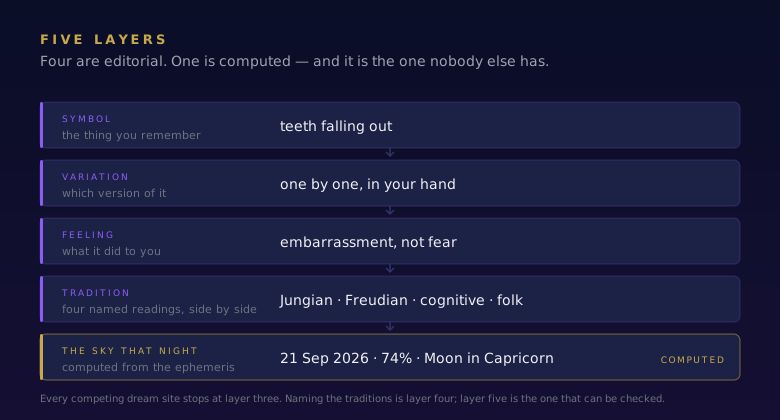
Four ways this is read
The Jungian reading
Treats the image as belonging to a shared vocabulary rather than a personal one, and asks what the image does rather than what it reminds you of. On this account the figures in a dream are closer to characters in a story everybody already knows than to coded references to your own week.
Reads water as what lies below awareness and depth as how far below, which makes drowning the extreme of that reading rather than a separate one: being taken under by material that was supposed to stay beneath the surface. The breathing-underwater version is treated as the significant one, since on this account it describes adaptation rather than defeat.
The Freudian reading
Treats the image as a disguise and asks what it is standing in for. It is the most parodied of the four and it produced one durable observation worth keeping: the feeling in a dream is often attached to something other than the thing the dream appears to be about.
Connected water dreams to birth and to states before language, and drowning sat inside that framework. The specific readings have not survived. The general one that has: a dream with a strong physical component tends to incorporate whatever the sleeping body is actually doing.
The cognitive or continuity reading
The one closest to current sleep science. It holds that dreams continue waking concerns rather than encoding messages, so the useful question is never "what does it mean" but "what in my week does this resemble". It is also the reading that explains recurrence most simply: an unresolved situation keeps producing similar material.
The most useful account here and the most concrete. Breathing during sleep is genuinely interrupted for a great many people, from a blocked nose upward, and the mind builds a narrative around the sensation. On this reading a proportion of drowning dreams have a physical cause and no meaning at all — which is worth knowing before looking for one.
The folk tradition
The oldest layer, and the one with the least explanation attached. Its readings vary sharply between cultures, which is itself informative — a symbol read the same way everywhere is behaving differently from one that is not.
Generally read as overwhelming misfortune, and unusually literal for folk material: water taking someone was a real and common way to die in the societies that produced these records. The readings are correspondingly grim and correspondingly short on interpretation.
How this one is usually misread
The dominant error is treating this as an intensity of the water symbol — looking up water, reading about emotion, and stopping. The accounts point somewhere more specific: water dreams attach to feeling and drowning dreams attach to capacity, to having passed the point where something can be managed. The second thing usually left out is the physical one. Interrupted breathing during sleep is common, the mind builds a story around the sensation, and a proportion of these dreams have a cause rather than a meaning. Saying so is more useful than any reading, and most dictionaries do not.
The feeling matters more than the image
Panic is near-universal in the accounts and therefore separates instances less than usual. What does separate them is what happened at the end: surfacing, being pulled out, waking, or the strange calm of the breathing-underwater version. Those four attach to genuinely different circumstances and are easy to record in three words. The other detail worth noting is whether the water was visible — a substantial number of reports describe the sensation with no water in the dream at all, which is the strongest hint that the breath and not the water is the content.
This one is felt, not only seen
People report this dream partly as a bodily sensation rather than an image — which is why it is remembered vividly and why it is hard to describe afterwards. The sensation is worth noting alongside the content when you write it down, because it is usually the part that changes between one instance and the next.
The Moon on the night you dreamed it
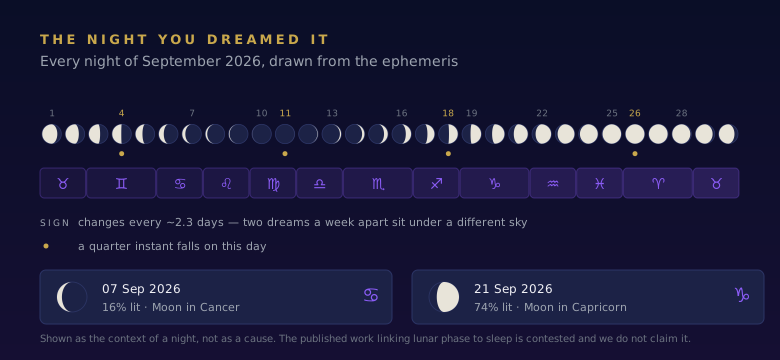
The one thing on this page that can be verified. Enter the night you went to sleep and you get the phase, the illuminated fraction and the sign the Moon held in the small hours, computed rather than asserted. It is context, not a cause — the published research on the Moon and sleep is contested, and the page on it says so.
Related symbols
These are descriptions of how a symbol is commonly read, never statements about you, and nothing here is medical or psychological advice.