Blood
Vitality and cost in the same image: what something is taking out of you.
What dreaming about Blood usually means
Blood is the symbol that carries two readings at once without either being the dominant one: it is life and it is cost, and a dream containing it is usually about something being taken out of you. That double sense is why the accounts attach so consistently to depletion rather than to injury — reports cluster around periods of sustained effort far more than around anything violent. The detail that separates instances is whose blood it was and whether there was a wound. Blood without an injury is reported distinctly and frequently, and it is the version dictionaries most often fail to distinguish. It is also a symbol where the physical dimension is real: people describe this dream as felt, and a meaningful number of reports involve waking to check. What the traditions agree on is that the substance is significant rather than the damage. There is also a plain asymmetry in who reports it, and it is worth stating rather than stepping around: menstruating women report blood dreams substantially more often, and in those cases the dream is continuing an ordinary bodily awareness with nothing to decode. The symbolic readings below are for the instances where no such explanation is sitting in plain view, which is a smaller set than the dictionaries assume.
Common variations
Your own blood
The most common version and the one that attaches most clearly to depletion — something is costing you and the dream is counting. The accounts frequently involve noticing it rather than being hurt, which is the detail worth keeping.
Someone else's blood
Shifts the reading onto them and onto your position relative to it: witnessing, helping or having caused it are three different accounts. Reports of this version attach to concern about another person more often than to guilt.
A great deal of blood
Volume rather than source, and reported as the most alarming. The readings attach to a cost that has become disproportionate to whatever produced it, and what people remember is usually not being able to stop it.
Blood with no injury
The strangest version and one of the more frequently reported. Cost with no visible cause, which attaches with unusual precision to depletion nobody can see — including the dreamer. The accounts describe confusion rather than fear.
Trying to stop the bleeding
Agency rather than observation, and the version that separates managing a cost from merely incurring one. The accounts attach to situations being actively contained, and the detail that recurs is what you used — a hand, a cloth, nothing to hand at all. Whether it worked matters less in the reports than whether you were the one doing it.
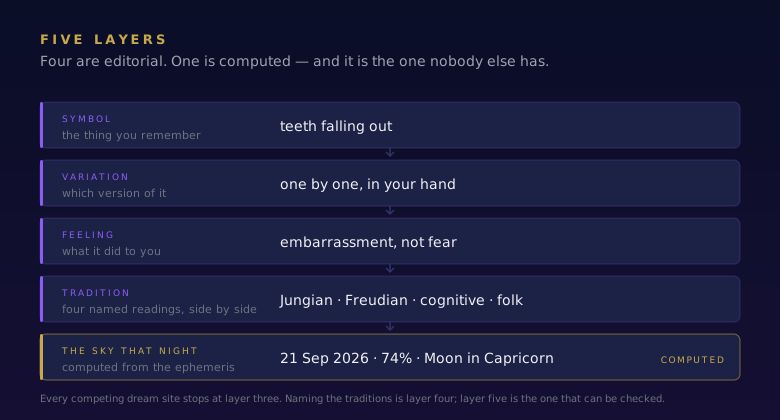
Four ways this is read
The Jungian reading
Treats the image as belonging to a shared vocabulary rather than a personal one, and asks what the image does rather than what it reminds you of. On this account the figures in a dream are closer to characters in a story everybody already knows than to coded references to your own week.
Reads blood as the substance of life rather than as evidence of harm, and attends to where it was going: spilled, shared, or contained. The tradition points at how widely blood functions in ritual as something given rather than lost, which reframes the dream as an exchange rather than an injury.
The Freudian reading
Treats the image as a disguise and asks what it is standing in for. It is the most parodied of the four and it produced one durable observation worth keeping: the feeling in a dream is often attached to something other than the thing the dream appears to be about.
Connected blood dreams to the body and to particular anxieties in ways that were tied to their period. The general point that remains is one this symbol illustrates unusually well: a dream image can produce a physical sensation on waking, and the sensation gets read back into the dream as meaning.
The cognitive or continuity reading
The one closest to current sleep science. It holds that dreams continue waking concerns rather than encoding messages, so the useful question is never "what does it mean" but "what in my week does this resemble". It is also the reading that explains recurrence most simply: an unresolved situation keeps producing similar material.
Notes the dream rises during illness, during periods of physical exhaustion, and for women around menstruation, where in each case it continues a bodily state directly. Outside those, the question it asks is what is currently costing more than it returns, and the without-a-wound version answers it almost too neatly.
The folk tradition
The oldest layer, and the one with the least explanation attached. Its readings vary sharply between cultures, which is itself informative — a symbol read the same way everywhere is behaving differently from one that is not.
Divided in an informative way. Several traditions read blood in a dream as kinship — blood as family rather than as substance — which produces readings about relatives rather than about cost. Others read it as loss straightforwardly. The kinship reading is the older and the less obvious of the two.
How this one is usually misread
The frequent error is reading blood as a warning about health, which sends people looking for reassurance and finds them none. No tradition that has thought about the symbol makes the claim, and the continuity account explains the correlation without it: the dream is more common during illness because illness is on the mind, not the other way round. The second habit worth breaking is treating blood as injury. The accounts attach far more often to depletion than to damage, and the without-a-wound version — common, and usually uncovered — makes the distinction impossible to miss once it is pointed at.
The feeling matters more than the image
Alarm is the expected report and it is not the most common one. Confusion is, particularly in the versions with no visible cause, and it attaches to circumstances where something is being used up invisibly. Revulsion is a third distinct report and it goes elsewhere again. The detail worth recording alongside the tone is whether you tried to stop it. Dreams where the dreamer acts and dreams where the dreamer watches attach to different situations, and for this symbol the difference is the same one between a cost being managed and a cost simply accruing.
This one is felt, not only seen
People report this dream partly as a bodily sensation rather than an image — which is why it is remembered vividly and why it is hard to describe afterwards. The sensation is worth noting alongside the content when you write it down, because it is usually the part that changes between one instance and the next.
The Moon on the night you dreamed it
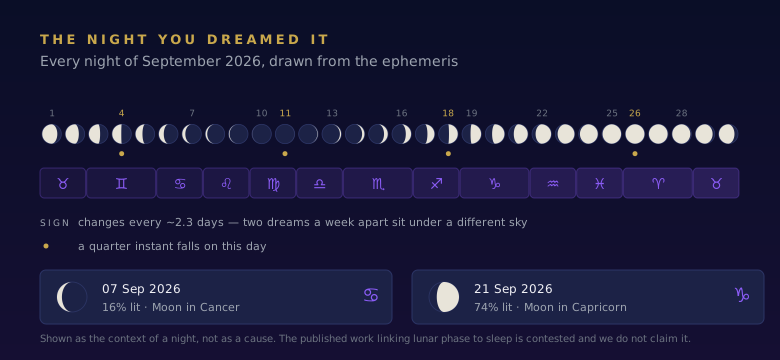
The one thing on this page that can be verified. Enter the night you went to sleep and you get the phase, the illuminated fraction and the sign the Moon held in the small hours, computed rather than asserted. It is context, not a cause — the published research on the Moon and sleep is contested, and the page on it says so.
Related symbols
These are descriptions of how a symbol is commonly read, never statements about you, and nothing here is medical or psychological advice.