New moon calendar
Every new moon from 2020 to 2035, computed to the minute and shown in your own timezone, with the zodiac sign and degree it falls in.
The next new moon
17.4° Libra
Every new moon in 2026
| Date | Phase | Name | Sign | Note |
|---|---|---|---|---|
| New moon | — | 4.4° Aquarius | ||
| New moon | — | 4.5° Pisces | ||
| New moon | — | 4.2° Aries | ||
| New moon | — | 3.4° Taurus | ||
| New moon | — | 2.1° Gemini | ||
| New moon | — | 0.4° Cancer | ||
| New moon | — | 28.5° Cancer | ||
| New moon | — | 26.6° Leo | ||
| New moon | — | 25.0° Virgo | ||
| New moon | — | 23.9° Libra | ||
| New moon | — | 23.3° Scorpio | ||
| New moon | — | 23.1° Sagittarius | ||
| New moon | — | 23.2° Capricorn | ||
| New moon | — | 23.3° Aquarius | ||
| New moon | — | 23.1° Pisces | ||
| New moon | — | 22.4° Aries | ||
| New moon | — | 21.3° Taurus | ||
| New moon | — | 19.8° Gemini | ||
| New moon | — | 18.0° Cancer | ||
| New moon | — | 16.2° Leo | ||
| New moon | — | 14.6° Virgo | ||
| New moon | — | 13.4° Libra | ||
| New moon | — | 12.7° Scorpio | ||
| New moon | — | 12.4° Sagittarius | ||
| New moon | — | 12.3° Capricorn | ||
| New moon | — | 12.3° Aquarius | ||
| New moon | — | 12.1° Pisces | ||
| New moon | — | 11.5° Aries | ||
| New moon | — | 10.5° Taurus | ||
| New moon | — | 9.1° Gemini | ||
| New moon | — | 7.4° Cancer | ||
| New moon | — | 5.7° Leo | ||
| New moon | — | 4.1° Virgo | ||
| New moon | — | 2.8° Libra | ||
| New moon | — | 2.0° Scorpio | ||
| New moon | — | 1.6° Sagittarius | ||
| New moon | — | 1.6° Capricorn | ||
| New moon | — | 1.6° Aquarius | ||
| New moon | — | 1.4° Pisces | ||
| New moon | — | 0.8° Aries | ||
| New moon | — | 29.8° Aries | ||
| New moon | — | 28.4° Taurus | ||
| New moon | — | 26.7° Gemini | ||
| New moon | — | 24.9° Cancer | ||
| New moon | — | 23.3° Leo | ||
| New moon | — | 22.0° Virgo | ||
| New moon | — | 21.1° Libra | ||
| New moon | — | 20.7° Scorpio | ||
| New moon | — | 20.7° Sagittarius | ||
| New moon | — | 20.7° Capricorn | ||
| New moon | — | 20.7° Aquarius | ||
| New moon | — | 20.3° Pisces | ||
| New moon | — | 19.4° Aries | ||
| New moon | — | 18.0° Taurus | ||
| New moon | — | 16.3° Gemini | ||
| New moon | — | 14.4° Cancer | ||
| New moon | — | 12.6° Leo | ||
| New moon | — | 11.1° Virgo | ||
| New moon | — | 10.1° Libra | ||
| New moon | — | 9.6° Scorpio | ||
| New moon | — | 9.6° Sagittarius | ||
| New moon | — | 9.7° Capricorn | ||
| New moon | — | 9.9° Aquarius | ||
| New moon | — | 9.7° Pisces | ||
| New moon | — | 9.0° Aries | ||
| New moon | — | 7.8° Taurus | ||
| New moon | — | 6.1° Gemini | ||
| New moon | — | 4.1° Cancer | ||
| New moon | — | 2.1° Leo | ||
| New moon | — | 0.4° Virgo | ||
| New moon | — | 29.1° Virgo | ||
| New moon | — | 28.4° Libra | ||
| New moon | — | 28.2° Scorpio | ||
| New moon | — | 28.4° Sagittarius | ||
| New moon | — | 28.7° Capricorn | ||
| New moon | — | 28.8° Aquarius | ||
| New moon | — | 28.5° Pisces | ||
| New moon | — | 27.5° Aries | ||
| New moon | — | 26.0° Taurus | ||
| New moon | — | 24.1° Gemini | ||
| New moon | — | 22.0° Cancer | ||
| New moon | — | 20.0° Leo | ||
| New moon | — | 18.4° Virgo | ||
| New moon | — | 17.4° Libra | ||
| New moon | — | 16.9° Scorpio | ||
| New moon | — | 17.0° Sagittarius | ||
| New moon | — | 17.3° Capricorn | ||
| New moon | — | 17.6° Aquarius | ||
| New moon | — | 17.6° Pisces | ||
| New moon | — | 17.0° Aries | ||
| New moon | — | 15.7° Taurus | ||
| New moon | — | 14.0° Gemini | ||
| New moon | — | 12.0° Cancer | ||
| New moon | — | 9.9° Leo | ||
| New moon | — | 8.1° Virgo | ||
| New moon | — | 6.7° Libra | ||
| New moon | — | 5.9° Scorpio | ||
| New moon | — | 5.7° Sagittarius | ||
| New moon | — | 5.8° Capricorn | ||
| New moon | — | 6.2° Aquarius | ||
| New moon | — | 6.4° Pisces | ||
| New moon | — | 6.1° Aries | ||
| New moon | — | 5.2° Taurus | ||
| New moon | — | 3.7° Gemini | ||
| New moon | — | 1.9° Cancer | ||
| New moon | — | 29.9° Cancer | ||
| New moon | — | 27.9° Leo | ||
| New moon | — | 26.4° Virgo | ||
| New moon | — | 25.3° Libra | ||
| New moon | — | 24.7° Scorpio | ||
| New moon | — | 24.7° Sagittarius | ||
| New moon | — | 24.8° Capricorn | ||
| New moon | — | 25.0° Aquarius | ||
| New moon | — | 24.9° Pisces | ||
| New moon | — | 24.2° Aries | ||
| New moon | — | 23.1° Taurus | ||
| New moon | — | 21.5° Gemini | ||
| New moon | — | 19.6° Cancer | ||
| New moon | — | 17.8° Leo | ||
| New moon | — | 16.1° Virgo | ||
| New moon | — | 14.8° Libra | ||
| New moon | — | 14.0° Scorpio | ||
| New moon | — | 13.8° Sagittarius | ||
| New moon | — | 13.8° Capricorn | ||
| New moon | — | 13.9° Aquarius | ||
| New moon | — | 13.7° Pisces | ||
| New moon | — | 13.2° Aries | ||
| New moon | — | 12.2° Taurus | ||
| New moon | — | 10.8° Gemini | ||
| New moon | — | 9.2° Cancer | ||
| New moon | — | 7.4° Leo | ||
| New moon | — | 5.7° Virgo | ||
| New moon | — | 4.4° Libra | ||
| New moon | — | 3.5° Scorpio | ||
| New moon | — | 3.0° Sagittarius | ||
| New moon | — | 3.0° Capricorn | ||
| New moon | — | 3.0° Aquarius | ||
| New moon | — | 2.8° Pisces | ||
| New moon | — | 2.3° Aries | ||
| New moon | — | 1.4° Taurus | ||
| New moon | — | 0.1° Gemini | ||
| New moon | — | 28.5° Gemini | ||
| New moon | — | 26.7° Cancer | ||
| New moon | — | 25.1° Leo | ||
| New moon | — | 23.7° Virgo | ||
| New moon | — | 22.8° Libra | ||
| New moon | — | 22.3° Scorpio | ||
| New moon | — | 22.2° Sagittarius | ||
| New moon | — | 22.2° Capricorn | ||
| New moon | — | 22.1° Aquarius | ||
| New moon | — | 21.7° Pisces | ||
| New moon | — | 20.8° Aries | ||
| New moon | — | 19.5° Taurus | ||
| New moon | — | 17.8° Gemini | ||
| New moon | — | 16.0° Cancer | ||
| New moon | — | 14.3° Leo | ||
| New moon | — | 12.9° Virgo | ||
| New moon | — | 11.9° Libra | ||
| New moon | — | 11.4° Scorpio | ||
| New moon | — | 11.2° Sagittarius | ||
| New moon | — | 11.3° Capricorn | ||
| New moon | — | 11.3° Aquarius | ||
| New moon | — | 11.1° Pisces | ||
| New moon | — | 10.3° Aries | ||
| New moon | — | 9.1° Taurus | ||
| New moon | — | 7.5° Gemini | ||
| New moon | — | 5.6° Cancer | ||
| New moon | — | 3.7° Leo | ||
| New moon | — | 2.0° Virgo | ||
| New moon | — | 0.9° Libra | ||
| New moon | — | 0.2° Scorpio | ||
| New moon | — | 0.1° Sagittarius | ||
| New moon | — | 0.2° Capricorn | ||
| New moon | — | 0.4° Aquarius | ||
| New moon | — | 0.4° Pisces | ||
| New moon | — | 29.9° Pisces | ||
| New moon | — | 28.8° Aries | ||
| New moon | — | 27.3° Taurus | ||
| New moon | — | 25.4° Gemini | ||
| New moon | — | 23.3° Cancer | ||
| New moon | — | 21.5° Leo | ||
| New moon | — | 20.0° Virgo | ||
| New moon | — | 19.1° Libra | ||
| New moon | — | 18.7° Scorpio | ||
| New moon | — | 18.8° Sagittarius | ||
| New moon | — | 19.2° Capricorn | ||
| New moon | — | 19.4° Aquarius | ||
| New moon | — | 19.2° Pisces | ||
| New moon | — | 18.5° Aries | ||
| New moon | — | 17.1° Taurus | ||
| New moon | — | 15.3° Gemini | ||
| New moon | — | 13.3° Cancer | ||
| New moon | — | 11.2° Leo | ||
| New moon | — | 9.5° Virgo | ||
| New moon | — | 8.2° Libra | ||
| New moon | — | 7.5° Scorpio | ||
| New moon | — | 7.4° Sagittarius | ||
| New moon | — | 7.7° Capricorn |
Times shown in UTC
What a new moon is, and why you cannot see it
Common misconception
Same longitude, invisible twice over
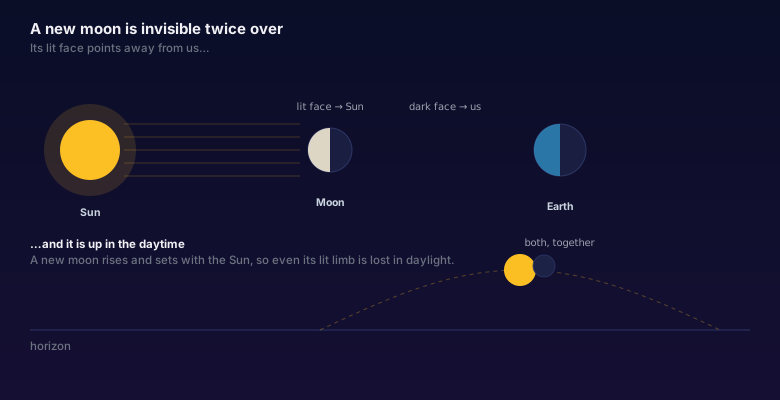
A new moon is the instant the Moon and the Sun share the same ecliptic longitude — the Moon passing between us and the Sun, with its lit hemisphere turned entirely away. Like the full moon it is a moment rather than a night, and this new moon calendar gives the moment.
It is invisible for two reasons at once, and the second one surprises people. Its lit face points away from us, so there is nothing to see; and it is in the sky at the same time as the Sun, rising and setting with it, so even the sliver of light along its limb is lost in daylight. A new moon is a daytime object.
The darkest sky of the month, and the word "new"
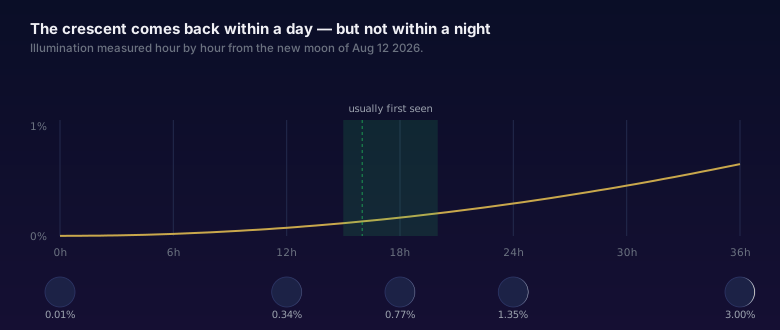
The earliest you can catch the returning crescent is usually 15 to 20 hours after the exact instant, low in the west just after sunset. Under ideal conditions observers have recorded it under 16 hours; the record attempts are a small and competitive field.
This is also the darkest sky of the month, which is why observatories and anyone chasing faint objects plan around the new moon rather than the full one. If you want to see the Milky Way, this calendar is the one to check.
The new moon starts the cycle
Where the lunation begins, and why the averages move
By convention the lunation begins at the new moon and ends at the next one, which is why moon age is counted in days since it. Everything else on a new moon calendar or a phase calendar is positioned relative to that instant: first quarter about 7.4 days later, full moon about 14.8, last quarter about 22.1.
Those are averages and the real intervals move by hours either way, because the Moon's orbit is an ellipse and it travels faster when it is closer to us. One lunation runs 29.27 days and another 29.83 — a difference of thirteen hours between the shortest and longest cycles of a year.
Lunar calendars, and a thirteen-hour spread
Most lunar and lunisolar calendars still start their months at or near the new moon. The Islamic calendar begins each month at the first sighting of the returning crescent, which is why its dates can differ by a day between countries: it depends on where you are standing and how clear the evening is.
The thirteen-hour spread between the shortest and longest lunation of a year has a practical consequence for anyone comparing calendars: you cannot get the next new moon by adding 29.53 days to the last one. The error accumulates, and after a few months it is enough to move a date. Every instant on this page is searched for individually rather than stepped forward from the one before.
New moons and solar eclipses
Every solar eclipse is a new moon
Every solar eclipse happens at a new moon, and for the same reason every lunar eclipse happens at a full one: the three bodies have to be in a line. What decides whether a given new moon produces an eclipse is how close it falls to the lunar nodes, the two points where the Moon's tilted orbit crosses the Earth's.
If the Moon's orbit were not tilted about 5°, there would be a solar eclipse at every single new moon. The tilt is why we get two to five a year instead, clustered into eclipse seasons about six months apart.
A solar eclipse is also the one case where the difference between a new moon and a visible event is stark. The Moon's shadow is small: even a total eclipse is only visible from a band a hundred kilometres or so wide, while the new moon itself is a fact about the whole planet at one instant.
Why this calendar does not flag them
This calendar does not flag solar eclipses on new moons, because unlike a lunar eclipse — which everyone on the night side sees identically — a solar eclipse is a different event depending on where you stand. The eclipse pages handle that properly, with local circumstances.
There is a nice symmetry between the two ends of the cycle. A lunar eclipse needs a full moon near a node and is seen identically by everyone on the night side of the planet; a solar eclipse needs a new moon near a node and is seen completely differently a hundred kilometres apart. Same alignment, same nodes, opposite viewing experience — because in one case the small body casts the shadow and in the other it receives it.
The new moon in astrological practice
A beginning rather than a culmination
Where the full moon is read as a culmination, the new moon is read as a beginning: the start of a cycle, the point to set an intention or open something rather than to finish it. The sign it falls in colours that, and the degree decides whether it touches anything in a particular chart.
Every entry in this new moon calendar carries a sign, and it is always the Sun's sign, because the two are conjunct by definition. A new moon while the Sun is in Aries is a new moon in Aries, every time — so the sign is predictable from the date and the degree is the number worth reading.
Timing rather than prediction
As with every page on this site, this is timing for your own actions rather than a prediction of events. What a chart adds is the house the new moon falls in, which is the difference between a general date and a personal one.
The waxing half of the cycle that begins here — new moon through full — is traditionally read as the part for starting and building, with the waning half for finishing and clearing. That gives a new moon calendar a use a phase table alone does not have: it marks the two weeks in each month that the tradition treats as the opening move rather than the closing one.
Frequently asked questions
When is the next new moon?
The block at the top of this new moon calendar gives the exact instant in your own timezone, with the Moon's sign and degree.
Can you see a new moon?
No. Its lit side faces away from us and it is in the daytime sky alongside the Sun. The returning crescent usually becomes visible 15 to 20 hours later, low in the west just after sunset.
Is a new moon the same as a dark moon?
Usually treated as the same thing, though some traditions use 'dark moon' for the last day or two before the exact instant, when no crescent is visible at all. This calendar gives the astronomical instant of conjunction.
How often is there a new moon?
Every 29.53 days on average — twelve or thirteen a year, alternating with the full moons about fourteen and a half days apart.
Why is there not a solar eclipse every new moon?
Because the Moon's orbit is tilted about 5° to the Earth's, so at most new moons the shadow passes above or below us. Eclipses only happen when a new moon falls near one of the two nodes where the orbits cross.
What sign is the new moon in?
Always the Sun's sign, because the two are conjunct by definition. The table gives the exact degree, which is the part that varies and the part that matters for a chart.
Is the new moon the best time for stargazing?
Yes. With no moonlight in the sky, the nights either side of a new moon are the darkest of the month, which is when faint objects like the Milky Way and deep-sky targets are easiest to see.
What is a new moon calendar used for?
Two quite different things. Observers use it to find the darkest nights of the month for stargazing and astrophotography. Astrologically it marks the start of each lunar cycle, which is read as the point for beginning something rather than finishing it. The dates are the same either way; only what you do with them differs.
Why does another site show a different date?
Timezone. These instants are rendered in your own zone; most almanacs publish UTC, and a new moon late in the UTC day falls on the previous date across the Americas.
Related pages
Calculated live from the ephemeris. Page rebuilt daily.