An exam
Being measured, and the fear of being found unprepared for it.
What dreaming about An exam usually means
The exam dream is distinctive for one reason that shapes everything else about it: most of the people who have it left education decades ago. That single fact rules out the literal reading and points the symbol somewhere more useful — being assessed, and the fear of being found unprepared for it. It is among the most commonly reported recurring dreams, and the recurrence tends to attach to periods of evaluation rather than to anything academic: a review, a new role, work being looked at by people who can judge it. The detail that carries information is what went wrong. Being unprepared, being unable to find the room and running out of time are three different complaints, and the accounts attach them to three different kinds of situation. A dictionary entry that reads "exam means stress" has collapsed all of them.
Common variations
Sitting an exam unprepared
The core version. What recurs in the accounts is not ignorance but the discovery of it — the moment of turning the paper over. It attaches to situations where you are about to be measured on something you have not kept up with, and people frequently identify what within a minute of waking.
Not being able to find the room
A different complaint entirely: the problem is access rather than preparation. It attaches to situations where the obstacle is procedural — not knowing how something works, or who to ask — and the frustration in the accounts is distinct from the fear in the unprepared version.
An exam in a subject you never studied
The most absurd version and reported with a specific outrage at the unfairness. It attaches to being judged by criteria you did not agree to and often did not know about, which is a recognisable workplace circumstance.
Running out of time
Preparation was adequate and the clock was not. It attaches to situations where capability is not the constraint and capacity is, which is a different problem and usually a more accurate one. What people remember is the number of questions left.
Still sitting exams decades later
Not a scenario so much as the fact that defines the symbol. The dream persisting thirty years after the last exam is the clearest evidence available that it is not about exams, and the accounts from long-graduated dreamers are otherwise identical to the rest.
Four ways this is read
The Jungian reading
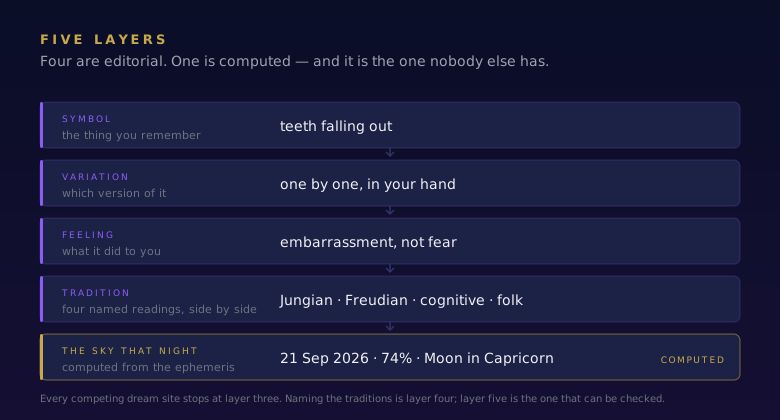
Treats the image as belonging to a shared vocabulary rather than a personal one, and asks what the image does rather than what it reminds you of. On this account the figures in a dream are closer to characters in a story everybody already knows than to coded references to your own week.
Reads the examination as a form of the ordeal that organises a great many initiation stories — a trial that stands between one state and the next. On that account the recurrence in adult life is unremarkable: the structure of being tested before advancing does not stop when schooling does.
The Freudian reading
Treats the image as a disguise and asks what it is standing in for. It is the most parodied of the four and it produced one durable observation worth keeping: the feeling in a dream is often attached to something other than the thing the dream appears to be about.
Made one of his more durable observations about this dream specifically: it tends to recur about tests already passed, not ones ahead, and he read that as reassurance rather than fear — the mind reaching for an ordeal that turned out survivable. The reading is contested and it is the rare case where the tradition proposes something checkable.
The cognitive or continuity reading
The one closest to current sleep science. It holds that dreams continue waking concerns rather than encoding messages, so the useful question is never "what does it mean" but "what in my week does this resemble". It is also the reading that explains recurrence most simply: an unresolved situation keeps producing similar material.
The strongest account here. The dream rises measurably during periods of evaluation and among people whose work is regularly judged, and it declines when those periods end. It requires no symbolism: an exam is simply the most rehearsed image of assessment that most people own, and the mind reaches for the nearest one.
The folk tradition
The oldest layer, and the one with the least explanation attached. Its readings vary sharply between cultures, which is itself informative — a symbol read the same way everywhere is behaving differently from one that is not.
Thin, because formal written examination is not universal across the traditions that produced dream-books, though it is recorded in Chinese sources where the imperial examinations made it a genuine and lifelong preoccupation. Those readings treat it as a matter of fate and preparation together, which is closer to the modern reading than most folk material gets.
How this one is usually misread
The usual error is flattening this to "exam means stress", which is true of nearly every dream anyone looks up and so distinguishes nothing. The symbol is more specific than that: it is about assessment, and the four failure modes above attach to four different kinds of situation. The second and more consequential misreading is the assumption that it is about school. It is not, and the clearest evidence is that most people reporting it left education decades ago — an entry framed around students has misread its own most distinctive fact.
The feeling matters more than the image
Panic is the expected report and the less informative one. What separates the accounts is the flavour of it: the unprepared version carries dread, the wrong-room version carries frustration, the never-studied version carries indignation, and those three attach to noticeably different circumstances. The detail worth recording is whether you sat down. A dream that ends before the exam begins is reported quite differently from one that goes through with it, and people who keep records sometimes find the dream progressing over months from the first to the second, which tends to track the underlying situation being faced rather than avoided.
If it keeps coming back
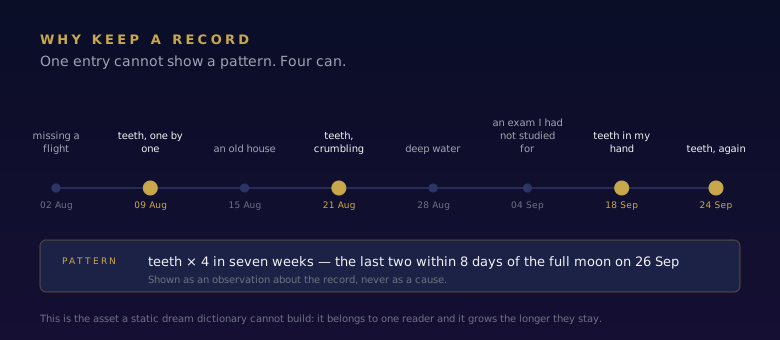
This is one of the symbols most often reported as recurring. The recurrence is more informative than the content: a single instance is an image, and eleven over two years is a pattern that can be checked against your life. The continuity account predicts something testable — recurring dreams tend to stop or change when the circumstances around them change — and people who keep records report exactly that.
The Moon on the night you dreamed it
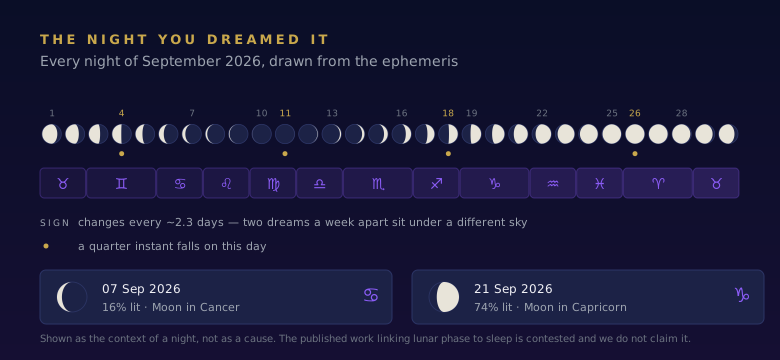
The one thing on this page that can be verified. Enter the night you went to sleep and you get the phase, the illuminated fraction and the sign the Moon held in the small hours, computed rather than asserted. It is context, not a cause — the published research on the Moon and sleep is contested, and the page on it says so.
Related symbols
These are descriptions of how a symbol is commonly read, never statements about you, and nothing here is medical or psychological advice.